


1. Legal Possibility under State Laws
- Societies registered under the Societies Registration Act, 1860 or relevant state laws must check the provisions of their respective state society laws and bye-laws.
- There is no uniform national law explicitly permitting or prohibiting digital elections.
- Some state registrars may allow e-voting or digital meetings if the society’s bye-laws authorize it.
- Legal recognition depends on whether digital methods uphold fairness, transparency, and participation.
- Any deviation from the registered bye-laws can render the election invalid.
2. Provision in Bye-laws or General Body Resolutions
- The society must have a specific clause in its bye-laws allowing digital voting or virtual meetings.
- If not present, the general body must pass a formal resolution approving digital elections.
- Such a resolution must be properly recorded and filed, if required, with the Registrar of Societies.
- Amendments to the bye-laws may be necessary in some jurisdictions.
- Clear mention of procedures, voter identification, and authentication methods is essential.
3. Modes of Digital Election
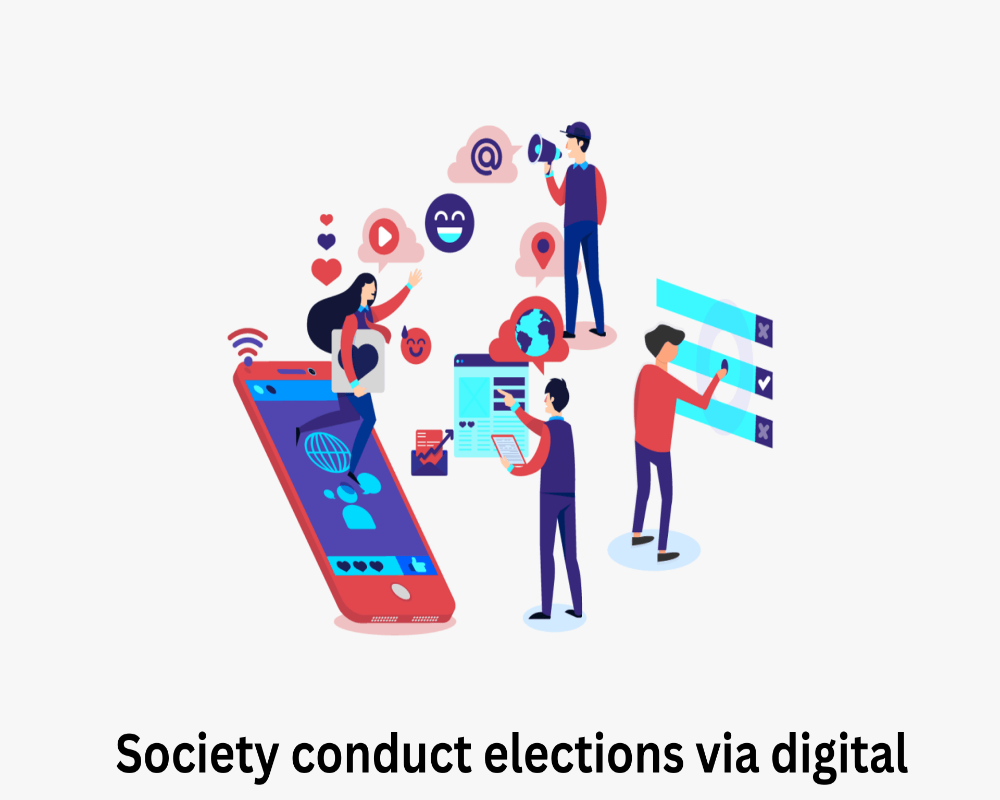
- Digital elections may be conducted through secure online voting platforms.
- Video conferencing tools may be used to hold general body meetings and display live counting.
- Verification mechanisms like OTP-based login, email validation, and digital signatures may be used.
- Results must be recorded, timestamped, and maintained with audit trails.
- Ballot secrecy, transparency, and equal access for all eligible members must be ensured.
4. Challenges and Legal Safeguards
- Legal disputes may arise if the digital process is not clearly defined or consented to by members.
- Members must be provided with adequate notice and technical support.
- There must be safeguards against fraud, duplicate voting, and vote tampering.
- Election rules must ensure that no member is excluded due to lack of internet access.
- Backup records and digital audit logs should be maintained for legal validation.
5. Recommendations for Implementation
- The society should consult legal experts and the concerned Registrar before proceeding.
- Use professionally developed e-voting platforms that ensure data protection and privacy.
- Provide clear instructions and a helpdesk to assist members during the process.
- Conduct a trial or mock election to ensure smooth functioning.
After completion, submit election reports and resolutions to the Registrar if required by local law.
0 Comments