


Introduction
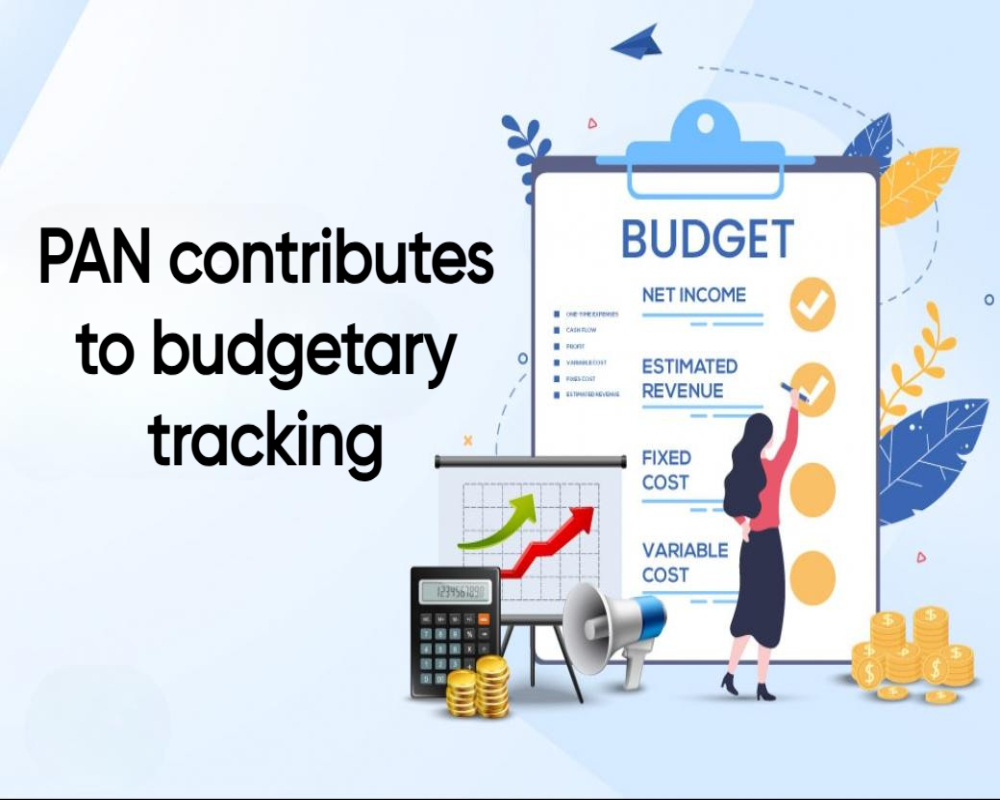
The Permanent Account Number (PAN) is a critical element in India’s financial and taxation ecosystem. It serves as a unique identifier for individuals, businesses, and entities engaging in taxable transactions. Beyond its role in tax filing and compliance, PAN plays a significant role in the government’s broader economic strategy, particularly in budgetary tracking. By linking financial activities across sectors, PAN provides valuable insights that help authorities track revenue sources, monitor expenditures, and plan effective fiscal policies. As India advances towards a digital economy, PAN-based tracking continues to be a foundational tool for shaping transparent and data-driven budgetary decisions.
PAN as a Universal Financial Identifier
PAN functions as a universal financial ID that connects various financial instruments, transactions, and institutions. Whether it involves salaries, professional fees, property transactions, investments, or loans, every significant financial activity is linked to a PAN. This comprehensive linkage provides a central repository of economic data crucial for budget analysis and forecasting.
Revenue Monitoring through PAN Integration
PAN allows the government to monitor direct tax collections effectively. All income tax payments, TDS (Tax Deducted at Source), and advance tax transactions are recorded against PAN. This enables the Finance Ministry to assess real-time trends in revenue inflow, which directly influences the allocation of funds in the national budget.
PAN in Expenditure Mapping
Expenditure patterns, especially high-value spending by individuals or businesses, are captured through PAN-linked reports. These include luxury purchases, foreign travel, large cash withdrawals, and capital investments. The government uses this data to understand consumption behavior and determine subsidy allocations or tax adjustments in the annual budget.
Use of PAN in Data Analytics for Budget Planning
Advanced data analytics tools utilize PAN-linked data to analyze economic activity across regions, demographics, and industries. The government can use these insights to identify growth sectors, track under-taxed segments, and revise tax slabs or incentives in the Union Budget accordingly.
PAN-Enabled GST and Indirect Tax Forecasting
Although GSTIN is used for indirect tax, it is derived from the entity’s PAN. This link ensures that the government can consolidate data from direct and indirect tax systems for comprehensive budget planning. It helps in forecasting tax revenue, identifying evasion trends, and adjusting GST rates based on compliance levels.
Tracking Subsidy and Benefit Leakages via PAN
Welfare schemes, subsidies, and government grants are increasingly being tracked through PAN in conjunction with Aadhaar and bank accounts. This integration ensures that benefits reach the rightful recipients and helps the government plug leakages, thereby making budget allocations more efficient and targeted.
PAN in Non-Tax Revenue Assessment
Non-tax revenues such as dividends from public sector undertakings, fees, fines, and licensing payments are also linked to PAN-based financial systems. These inputs allow the government to accurately project non-tax revenue streams in the budget and plan disbursements accordingly.
Detection of Black Money and Hidden Economy
By capturing unexplained income and unreported financial activity through PAN-linked systems, the government can identify sources of black money and bring them into the tax net. This supports the budget by increasing tax base, reducing evasion, and enabling fairer distribution of national resources.
Contribution to Fiscal Deficit Management
With PAN allowing real-time tracking of revenue generation and spending, fiscal deficit management becomes more precise. Authorities can take timely action to either curb expenditure or boost collections, thereby maintaining fiscal discipline and supporting macroeconomic stability.
PAN as a Foundation for Digital Budget Ecosystems
PAN is integral to India’s vision of a digital financial infrastructure. From taxpayer portals and budget dashboards to centralized payment systems, PAN links all nodes of the fiscal ecosystem. This interconnected framework allows for automated, data-driven, and transparent budgetary operations across ministries.
Conclusion
PAN has evolved into a powerful tool for budgetary tracking and fiscal planning in India. Its role extends beyond taxation into broader economic management, helping the government monitor revenues, plan expenditures, and ensure financial accountability. By providing a unified view of financial activity across the nation, PAN strengthens budget formulation, supports policy decisions, and advances the goal of inclusive and transparent governance.
Hashtags
#pan #budgettracking #publicfinance #fiscalpolicy #incometax #taxcollection #revenuemonitoring #panintegration #budgetplanning #gst #fiscaldeficit #economicdata #subsidytracking #financialtransparency #digitalgovernance #economicforecast #taxbase #budgetexecution #blackmoney #governmentexpenditure #budgetmonitoring #publicspending #panusage #budgetsystem #indianeconomy
0 Comments