


Introduction
The Permanent Account Number (PAN) is a critical financial identifier issued by the Income Tax Department of India. While originally designed to streamline income tax processes, PAN has now become a universal requirement across various sectors of the financial ecosystem. In today’s digital economy, the integration of PAN with digital wallets and bank accounts is a major step toward transparency, compliance, and efficient financial management. This linkage ensures proper KYC (Know Your Customer) verification, prevents financial fraud, and enables seamless monitoring of taxable financial activities. Understanding the role of PAN in the context of digital wallets and banks highlights its importance in both regulatory frameworks and user convenience.
PAN and KYC Compliance in Banks
Banks in India are mandated to collect PAN details as part of their customer onboarding process. Whether opening a savings, current, fixed deposit, or NRI account, PAN is essential for completing KYC. This linkage ensures the legal identity of the account holder is established and reported correctly to financial authorities, minimizing risks of fraud, impersonation, and illegal fund movements.
Mandatory PAN for High-Value Bank Transactions
PAN is compulsory for certain high-value transactions in banks, including cash deposits or withdrawals exceeding ₹50,000 in a day, opening term deposits above ₹50,000, and issuing bank drafts or pay orders of the same value. These PAN-linked transactions are reported to the Income Tax Department under the Statement of Financial Transactions (SFT), allowing authorities to monitor large cash movements and assess tax compliance.
Linking PAN to Digital Wallets for Full Access
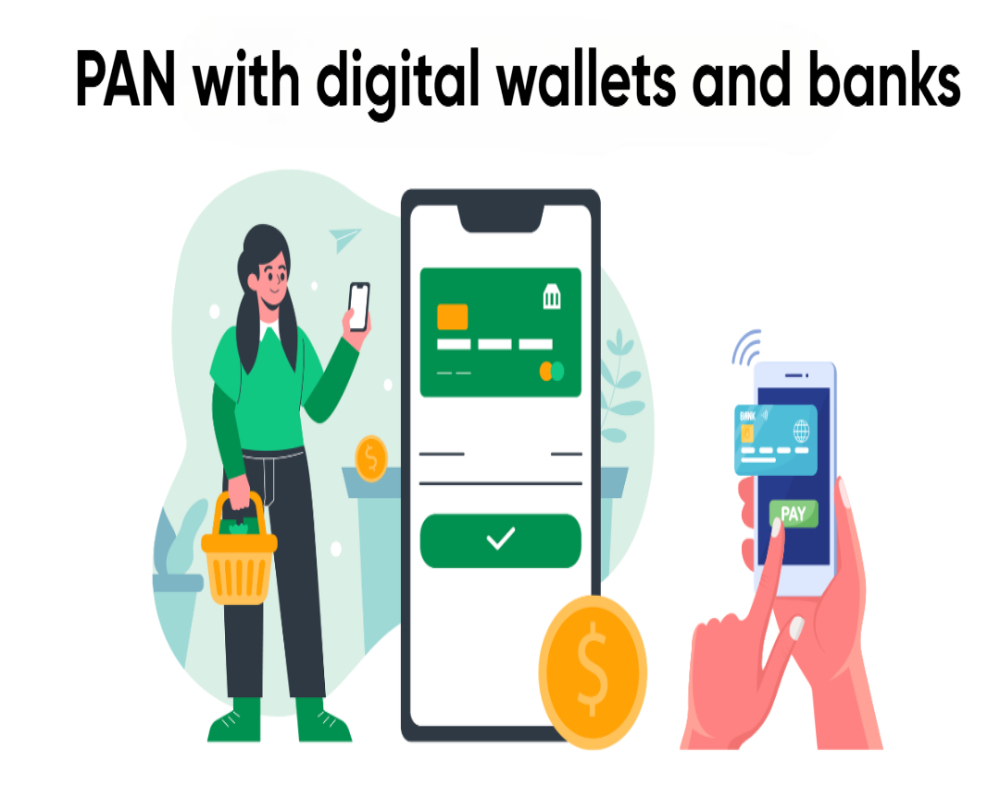
Digital wallets such as Paytm, PhonePe, Google Pay, and others offer full KYC wallets that support higher transaction limits, bank transfers, and investment features. For users to unlock these features, linking PAN is mandatory. PAN helps verify the user’s identity, fulfill RBI regulations, and integrate wallet transactions with financial records.
PAN-Based Wallet KYC Verification
Digital wallet providers use PAN to perform instant e-KYC verification. By cross-referencing the PAN with official databases, the wallet company confirms the user’s legitimacy and ensures that the wallet is not misused for money laundering, illegal transactions, or duplicate identity creation.
PAN and Bank Account Integration in Wallets
To transfer funds between wallets and bank accounts, the PAN must be linked to both the digital wallet and the bank account. This ensures that the transaction trail is traceable, which is essential for financial transparency and audit purposes. PAN linkage also ensures that interest earned on wallet-linked bank accounts is properly reported and taxed.
Tracking Financial Transactions Across Platforms
Once PAN is linked, every digital or bank transaction above prescribed limits becomes part of the user’s financial footprint. This linkage helps the Income Tax Department match reported income with actual financial behavior, identify discrepancies, and detect unreported income or suspicious activity.
Investment and Credit Services via PAN-Linked Wallets
Many digital wallets now offer investment options such as mutual funds, gold, or insurance, and even small credit products like BNPL (Buy Now, Pay Later). PAN is mandatory for accessing these services. It ensures that gains or income earned are recorded and reported in the user’s PAN-linked tax profile, contributing to overall financial traceability.
PAN for Refunds and Benefits Transfer
Government subsidies, tax refunds, and scheme-related payments are often transferred to PAN-linked bank accounts or wallets. This ensures that the rightful beneficiary receives the amount and eliminates chances of duplication, fraud, or ghost accounts.
Regulatory Reporting and PAN Monitoring
Both banks and wallet providers must report certain PAN-linked financial activities to the Income Tax Department and the Financial Intelligence Unit (FIU). This includes foreign remittances, high-value purchases, investment inflows, and unusual spending patterns, which are monitored to ensure financial discipline and national security.
Consumer Benefits of PAN Linkage
Linking PAN with bank and wallet accounts not only ensures regulatory compliance but also benefits consumers. It allows easy access to tax summaries, pre-filled ITRs, faster loan processing, eligibility for financial products, and better tracking of spending and investments—all from a secure and centralized identity.
Conclusion
PAN has evolved into a powerful tool for integrating India’s financial systems—from traditional banks to modern digital wallets. Its linkage ensures that financial transactions are legally documented, tax compliant, and transparent. For both individuals and institutions, this connectivity fosters responsible financial behavior, simplifies reporting, and enables access to a broader range of digital services. As India progresses toward a unified digital financial infrastructure, PAN will continue to anchor the nation’s efforts toward efficient, inclusive, and accountable economic governance.
Hashtags
#pan #digitalwallets #bankaccounts #panlinking #financialcompliance #kyc #highvaluetransactions #paytm #phonepe #googlepay #taxcompliance #financialsecurity #walletkyc #rbi #banktransactions #sft #ekyc #investmentwallets #taxreporting #bnpl #incometaxindia #refunds #digitalbanking #panintegration #financialregulation #moneylaunderingprevention
0 Comments