

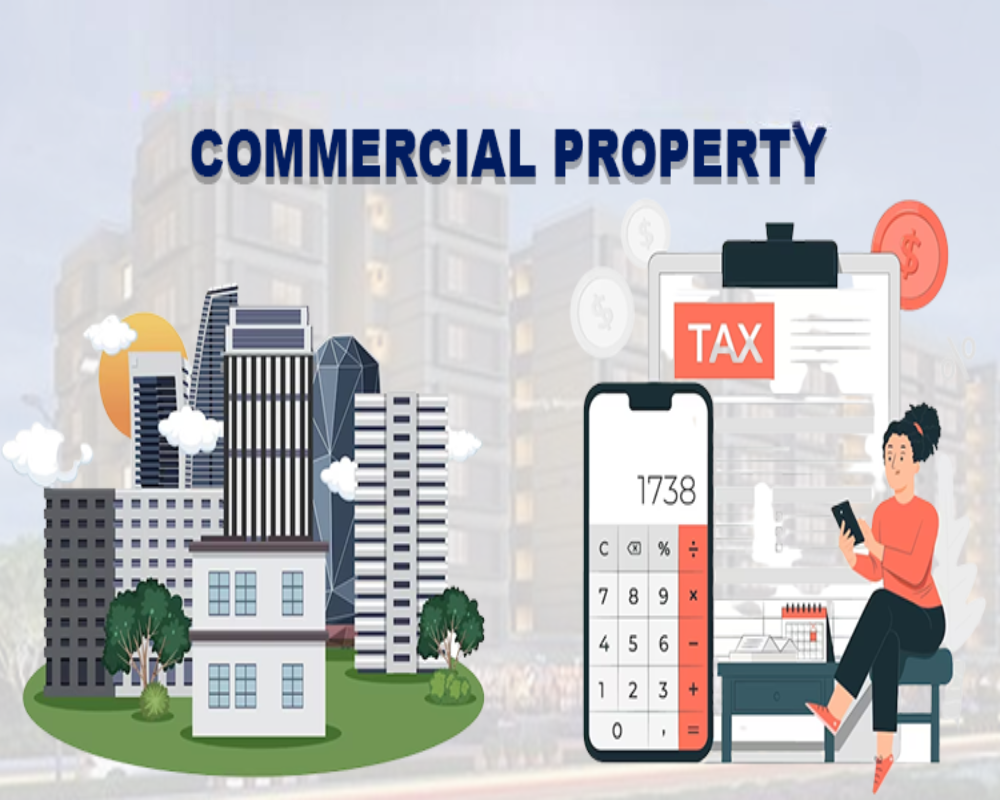

Definition and Classification
- Commercial properties refer to buildings or premises used for business purposes.
- These include shops, offices, showrooms, hotels, warehouses, and malls.
- Municipal corporations classify properties based on usage type—residential, commercial, or industrial.
- Mixed-use buildings with both residential and commercial parts are taxed separately by section.
- Proper classification is essential for accurate tax calculation and compliance.
Higher Tax Rates for Commercial Use
- Commercial properties are taxed at higher rates than residential properties.
- The tax rate reflects the greater revenue potential and utility consumption of such properties.
- Separate slabs or multipliers are applied in cities that use the capital or unit area valuation method.
- Municipalities often impose additional service charges on commercial premises.
- The rate also varies based on location, type of business, and building features.
Factors Considered in Tax Assessment
- Built-up area, floor usage, and zone classification are key criteria.
- Nature of business, footfall, and income-generating capacity may influence valuation.
- Building type—independent structure, high-rise, or shop-in-complex—affects the rate.
- Commercial properties with amenities like lifts, AC, or generators attract higher assessments.
- Occupancy status (owned, rented, or leased) may also be taken into account.
Calculation Method and Billing
- Tax is calculated using either the capital value, annual rental value, or unit area value system.
- For capital value method: Tax = Capital Value × Commercial Rate × Multipliers.
- For ARV: Tax = Annual Rent Value × Tax Percentage + Cess/Service Charges.
- Property tax is billed annually or semi-annually by the municipal authority.
- Online calculators are often available on municipal websites to estimate dues.
Compliance, Rebates, and Penalties
- Commercial owners must file updated property details with every structural change.
- Late payment attracts penalty interest, often higher for commercial defaulters.
- Municipalities may conduct inspections or reassessments periodically.
- Some states offer no rebates on commercial property tax unlike residential properties.
- Compliance ensures access to trade licenses, water, and electricity connections.
0 Comments