

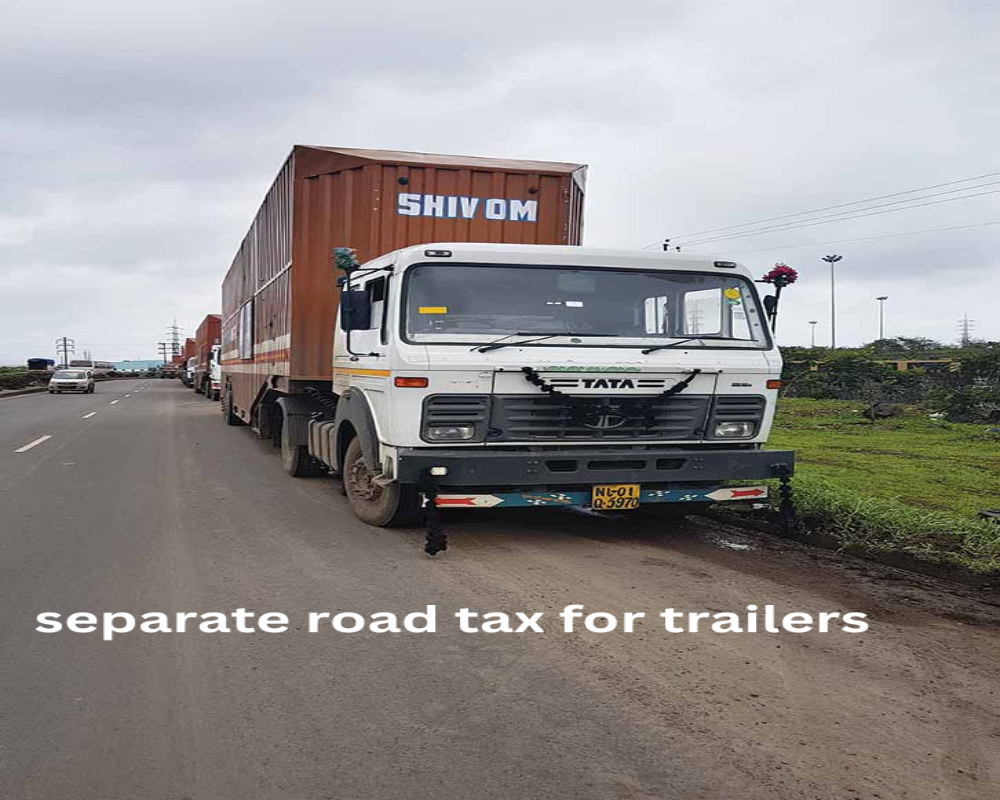

Classification of Trailers
- Trailers are considered non-motorized vehicles towed by motorized tractors or trucks.
- They are used for transporting goods, equipment, or containers.
- They fall under the category of transport/commercial vehicles under the Motor Vehicles Act.
- Registration and taxation rules apply independently from the towing vehicle.
- A trailer must be registered with its own number and ownership documentation.
Separate Taxation Rules
- Yes, trailers are subject to separate road tax in most Indian states.
- The road tax is generally calculated based on the unladen weight or gross vehicle weight.
- The towing truck and trailer are taxed individually, not as a single unit.
- States notify distinct slabs and rates applicable specifically to trailers.
- Tax is levied for the trailer’s use of public roads, even without a motor.
State-Specific Variations
- Road tax rates and rules for trailers vary by state transport authority.
- Some states levy a fixed annual fee, while others follow weight-based slabs.
- Concessions may apply for agricultural or low-capacity utility trailers.
- Commercial use trailers attract higher tax due to load impact on roads.
- States like Maharashtra, Karnataka, and Gujarat publish clear trailer-specific rates.
Permit and Fitness Compliance
- Trailers must have a valid Registration Certificate and fitness certificate.
- A separate road tax receipt is required at the time of registration and renewal.
- Transport permits are necessary if the trailer is used for interstate goods movement.
- Overloading or unauthorized modification of trailers can lead to fines and suspension.
- The trailer must comply with all safety and axle-related regulations.
Documents and Legal Requirements
- Owner’s identity and address proof.
- Form 20 (application for registration of trailer).
- Manufacturer’s certificate of unladen weight.
- Road tax payment receipt specific to the trailer unit.
Insurance policy, even if third-party only, covering trailer use.
0 Comments