

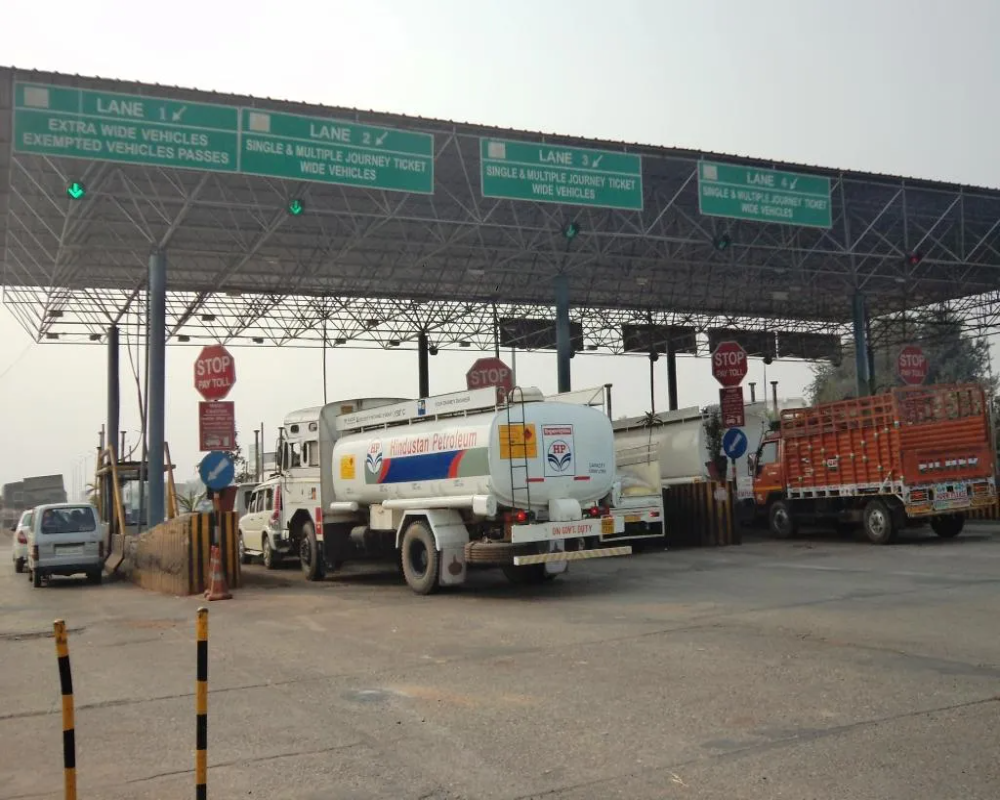

Vehicle Classification Guidelines
- Multi-axle vehicles are categorized separately from standard vehicles.
- They typically include trucks, trailers, and heavy-load carriers.
- Classification is based on the number of axles and vehicle dimensions.
- Toll rules assign specific tariff categories for such configurations.
- The classification affects the base toll rate and applicable charges.
Axle Count and Weight Factor
- Toll is calculated according to the number of axles a vehicle has.
- Vehicles with more axles exert greater road wear and tear.
- Higher axle count results in proportionally higher toll charges.
- Some toll plazas also consider loaded weight in the final toll amount.
- Overloaded vehicles may incur additional penalties or charges.
Distance-Based and Fixed Tariffs
- On some highways, toll is charged per kilometer traveled.
- Multi-axle rates are fixed per km based on official schedules.
- On other routes, a fixed slab rate is used regardless of distance.
- Tariff calculation depends on whether the road is under BOT, HAM, or EPC.
- Toll structure is outlined clearly on each toll route’s rate board.
Government Fee Notification
- Toll rates for multi-axle vehicles are issued under the National Highways Fee Rules.
- These rates are notified by the Ministry of Road Transport and Highways.
- The National Highways Authority of India enforces these rules.
- Periodic revisions are made considering inflation and road usage.
- All toll booths must display current rates for each vehicle type.
Electronic Toll and Compliance
- Multi-axle vehicles must use RFID tags for electronic toll collection.
- The system automatically identifies axle count via classification code.
- Incorrect category entry can result in fines or double toll charges.
- Surveillance ensures proper tagging and toll category compliance.
- Accurate vehicle data helps maintain fair toll assessment.
0 Comments