

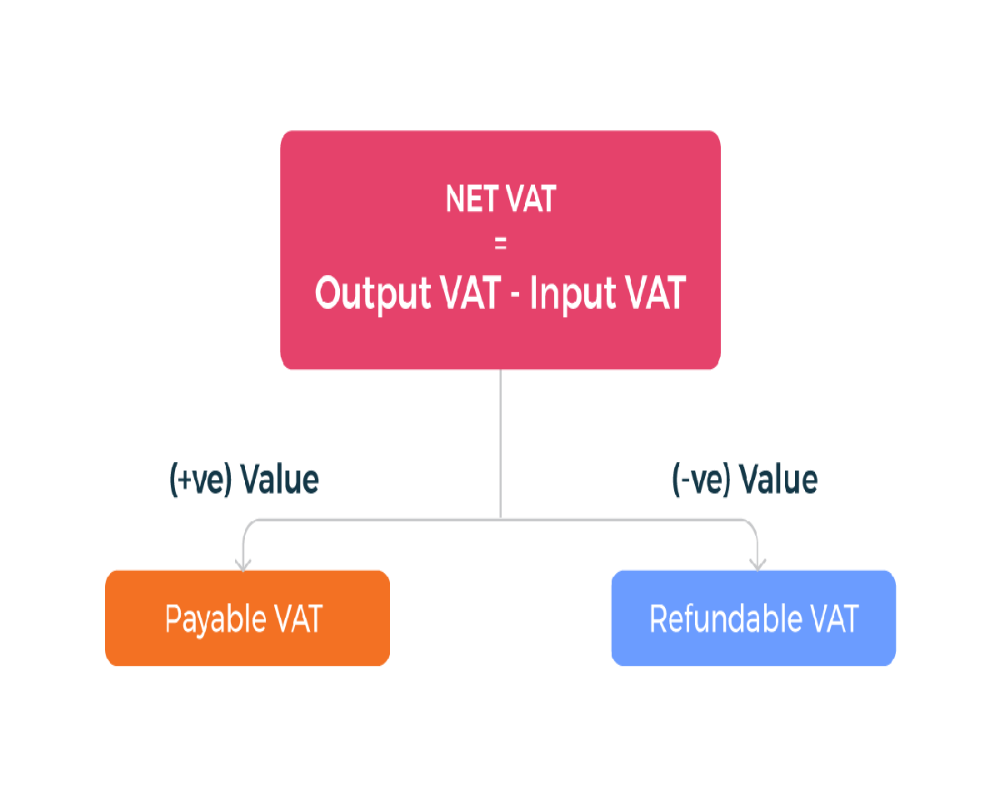

Understanding Input VAT Exceeding Output VAT
- This situation arises when a business pays more VAT on purchases (input) than it collects on sales (output)
- It typically occurs in cases of low sales, high stock accumulation, or capital investment
- Input VAT may also exceed output VAT if the business deals in zero-rated or exempt supplies
- This difference results in a net VAT credit position for the business
- The excess input VAT can either be carried forward or claimed as a refund, depending on the law
Options Available for the Excess Input VAT
- The excess input VAT is usually carried forward to the next tax period
- It can be used to offset future output VAT liability in upcoming returns
- In specific cases, such as exports or exempt sales, businesses may claim a refund
- Some states allow partial refunds subject to documentation and verification
- Refund or carry-forward must be duly declared in VAT returns with supporting records
Conditions for Claiming Refund
- Refund can be claimed only if the VAT return is filed correctly and timely
- Businesses must submit supporting documents such as purchase invoices, VAT challans, and stock records
- Exporters must provide Form H and shipping documentation to justify zero-rated sales
- Refund applications often require a CA certification or departmental audit
- The refund process is subject to approval by the VAT officer, and delays may occur
Impact on Accounting and Cash Flow
- Excess input VAT is shown as a recoverable asset in the books until adjusted or refunded
- It may improve cash flow in future periods by reducing tax payments
- In the short term, it may tie up working capital if refunds are delayed
- Accurate VAT reconciliation ensures the excess credit is not lost or disputed
- Proper classification of purchases helps in determining eligible and ineligible input VAT
Post-GST Implications and Legacy Treatment
- Under GST, similar provisions exist for input tax credit and refunds, improving uniformity
- Excess input VAT under the old VAT regime remains relevant for legacy returns and audits
- Businesses may still have pending refund claims or assessments under pre-GST laws
- It is important to retain documentary evidence for any carried-forward input VAT
Understanding VAT credit management helps in closing old tax periods correctly
0 Comments