


Introduction
In trademark law, the opposition process allows third parties to challenge the registration of a trademark. Once a trademark application is published in the Trademark Journal, a certain period is granted during which interested parties can file an opposition if they believe the registration would infringe on their rights. The opposition hearing is an essential step in this process, and its timeline is carefully calculated to ensure fairness and due process for both the applicant and the opposing party. This article explains how the opposition hearing timeline is calculated in trademark cases.
Step 1: Publication of Trademark in the Trademark Journal
The opposition hearing process begins after a trademark application has been published in the Trademark Journal. Once the trademark is published, it is open for opposition from third parties, usually competitors or individuals with rights to an earlier trademark. The publication serves as a public notice, allowing interested parties to assess whether the trademark application might conflict with their own rights.
Step 2: Opposition Period
In most jurisdictions, the opposition period begins the day after the trademark is published in the Trademark Journal. This period typically lasts for 30 days but can vary depending on the trademark office or jurisdiction. During this opposition period, third parties can file an opposition against the registration of the trademark. If no opposition is filed within the stipulated period, the application proceeds to registration.
Step 3: Filing the Notice of Opposition
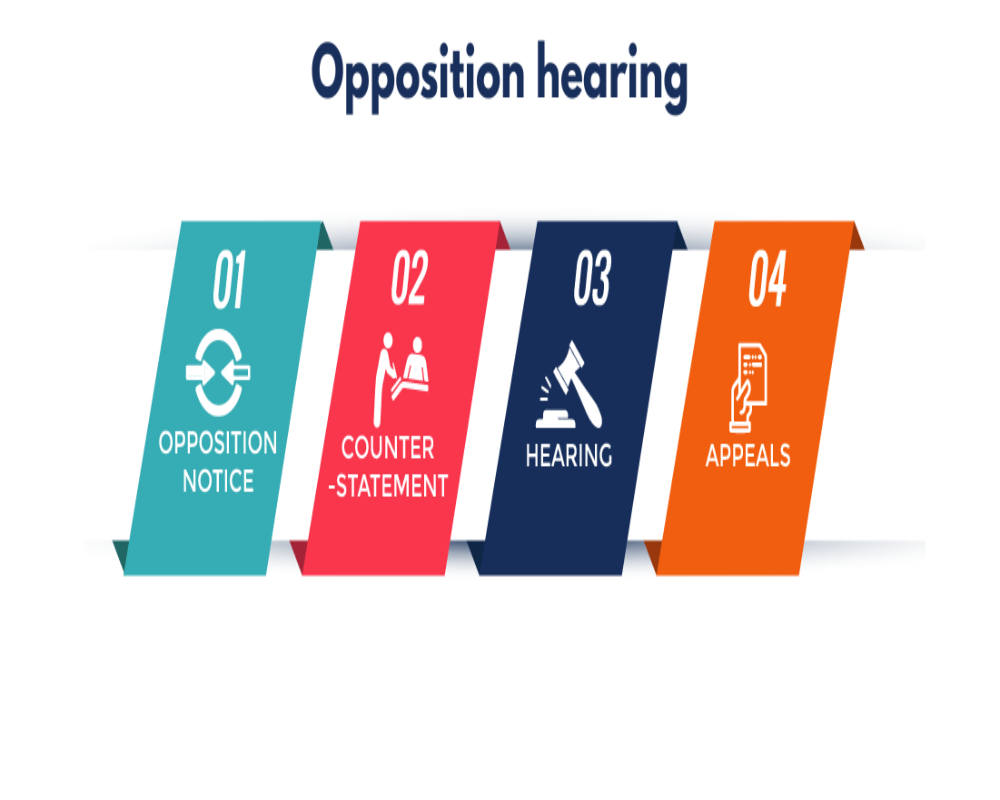
If a third party wishes to oppose the trademark, they must file a Notice of Opposition with the relevant trademark office. The notice must include a statement of the grounds for opposition, supporting evidence, and any relevant legal arguments. This filing must be done within the opposition period, which is usually 30 days from the publication date.
Step 4: Applicant’s Response to Opposition
After the Notice of Opposition is filed, the trademark applicant is given a specified time frame to respond. The applicant typically has 30 days to file a counter-statement in response to the opposition. This counter-statement must address the grounds raised in the opposition and can include supporting evidence to defend the trademark application.
Step 5: Preparation of Evidence
Once the counter-statement is filed, both parties are allowed time to prepare and submit further evidence in support of their arguments. This preparation phase is usually set to a specific timeline, which could be 30 to 60 days depending on the jurisdiction. The timeline for evidence submission is crucial as it gives both parties time to gather any necessary documentation or testimonies.
Step 6: Scheduling the Hearing
Once both parties have submitted their evidence, the trademark office schedules the opposition hearing. The hearing is typically set for a date within 60 to 90 days after the submission of the evidence. This allows both parties to prepare adequately and make their cases before the trademark office. In some cases, the hearing may be rescheduled if either party requests additional time or if there are scheduling conflicts.
Step 7: Opposition Hearing
During the opposition hearing, both the applicant and the opposer present their arguments and evidence to the trademark office. The hearing is generally conducted in writing, but some jurisdictions may allow an oral hearing. The parties will have an opportunity to rebut each other’s arguments and evidence.
Step 8: Decision and Final Ruling
After the hearing, the trademark office will make a decision on whether the trademark should be registered or refused based on the opposition proceedings. This decision is typically issued within a few months after the hearing, but the timeline for this decision can vary. If either party is dissatisfied with the decision, they may have the option to appeal the decision to a higher authority.
Conclusion
The opposition hearing timeline is carefully structured to ensure both parties have adequate time to present their cases. From the publication of the trademark in the Trademark Journal to the final decision, the process includes several key steps, including the filing of the opposition, submission of counter-statements, and preparation of evidence. By following a set timeline, the trademark office ensures a fair and transparent process for resolving trademark disputes. Timely filing and adherence to the deadlines are crucial for the success of both the applicant and the opposing party.
#Hashtags
#TrademarkOpposition #TrademarkHearing #OppositionPeriod #TrademarkRegistry #TrademarkApplication #OppositionProcess #TrademarkLaw #LegalRights #TrademarkOppositionHearing #TrademarkOffice #OppositionFiling #TrademarkApplicant #TrademarkCounterStatement #TrademarkEvidence #TrademarkOppositionTimeline #IntellectualProperty #TrademarkOppositionProcess #LegalProcedure #TrademarkDispute #TrademarkAppeal #TrademarkJournal #OppositionHearingProcess #TrademarkRights #TrademarkOppositionClaim #TrademarkOfficeTimelines #TrademarkEnforcement #TrademarkRegulations
0 Comments