

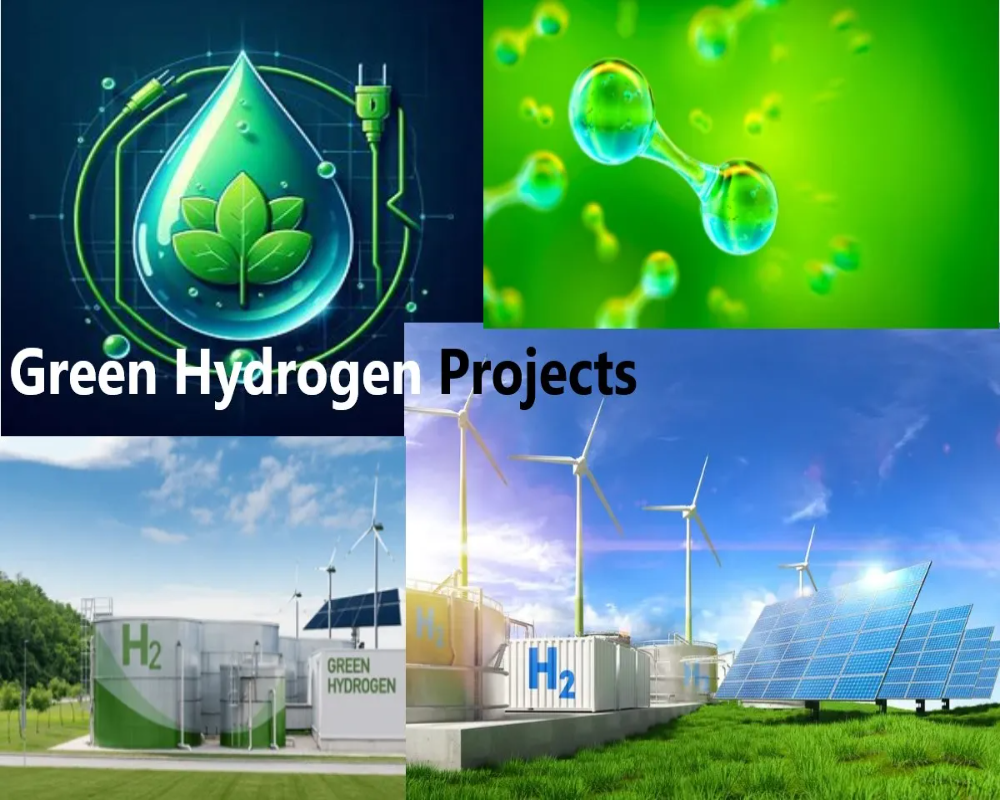

The Indian government has launched an ambitious push to promote green hydrogen production through public-private joint ventures (JVs) as part of its long-term energy transition and decarbonization goals. Spearheaded by the Ministry of New and Renewable Energy (MNRE) under the National Green Hydrogen Mission, the initiative is designed to attract large-scale investments and foster collaboration between government-owned enterprises, private energy companies, research institutions, and technology developers. The goal is to create a robust, indigenous green hydrogen ecosystem that enhances energy independence, supports net-zero emissions targets, and builds future-ready clean energy infrastructure.
Under the policy framework, joint ventures are eligible for financial incentives, including capital subsidies, production-based incentives, and priority land access for setting up electrolysis units powered by renewable energy sources such as solar and wind. The government permits 100% foreign direct investment (FDI) under the automatic route in the renewable energy sector, encouraging global players to partner with Indian firms for hydrogen production, storage, distribution, and utilization in sectors like transport, power, and heavy industry. Additionally, fast-track approvals, tax concessions, and infrastructure support are offered to ensure rapid project implementation.
The policy emphasizes joint ventures that advance electrolyzer manufacturing, green hydrogen mobility solutions, fuel cell development, and low-carbon ammonia production. Projects that integrate technology transfer, innovation in hydrogen carriers, and scalable business models are prioritized for strategic support. Through this initiative, the government aims to transform India into a global hub for green hydrogen manufacturing and exports, while simultaneously reducing its reliance on fossil fuels and positioning joint ventures as key drivers in the country’s clean energy future.
0 Comments