

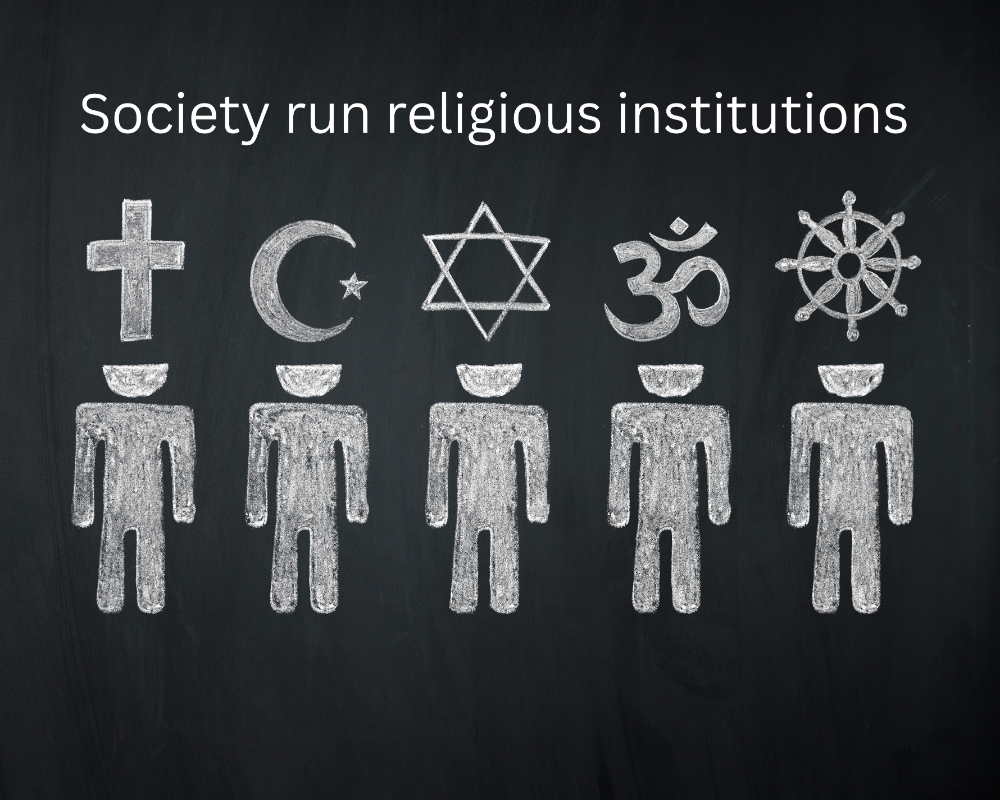

1. Legal Permission under the Societies Registration Act
- Yes, a society can run religious institutions if its objectives include religious, spiritual, or cultural promotion.
- The Societies Registration Act, 1860 allows societies to be formed for purposes including religion and charity.
- The society must clearly mention its religious intent and nature of the institution in its Memorandum of Association.
- Religious societies must still function as non-profit entities and avoid profit distribution.
- Their primary focus should remain on public service through religious or spiritual outreach.
2. Types of Religious Institutions Allowed
- Societies may operate temples, mosques, churches, prayer halls, meditation centers, and similar religious establishments.
- They may also run spiritual education programs, religious libraries, or scripture study groups.
- Organizing festivals, pilgrimages, or interfaith dialogues is permitted if aligned with their bylaws.
- Running religious charitable hospitals or schools is also allowed under combined objects.
- The institution must not be operated for personal or sectarian benefit.
3. Registration and Operational Requirements
- The society must be registered with a clearly stated religious objective in its charter documents.
- The governing body must ensure transparency in financial and administrative operations.
- Religious services or events must be voluntary and open to public benefit, not exclusive monetized programs.
- If property or donations are involved, proper accounting and audit must be maintained.
- The society must file annual reports and follow general compliance under its applicable state society law.
4. Tax Exemption and FCRA Considerations
- Societies running religious institutions may apply for income tax exemption under Section 12A, but Section 80G approval is generally not granted for purely religious activities.
- If the society receives foreign contributions, it must register under the FCRA Act, and ensure funds are used only for approved religious or charitable purposes.
- Mixed-purpose societies (religious + charitable) may need to segregate activities and funds clearly.
- Tax exemptions may be rejected if the society promotes one religion to the exclusion of others.
5. Limitations and Legal Boundaries
- Religious societies must not promote hate speech, forced conversions, or communal division.
- They must operate within constitutional limits on secularism and public order.
- They cannot use religious platforms for political activities or elections.
- If involved in land or property transactions, local government permissions and land use approvals may be required.
Any misuse of funds or deviation from religious objectives may lead to legal action or cancellation of registration.
0 Comments