


Introduction
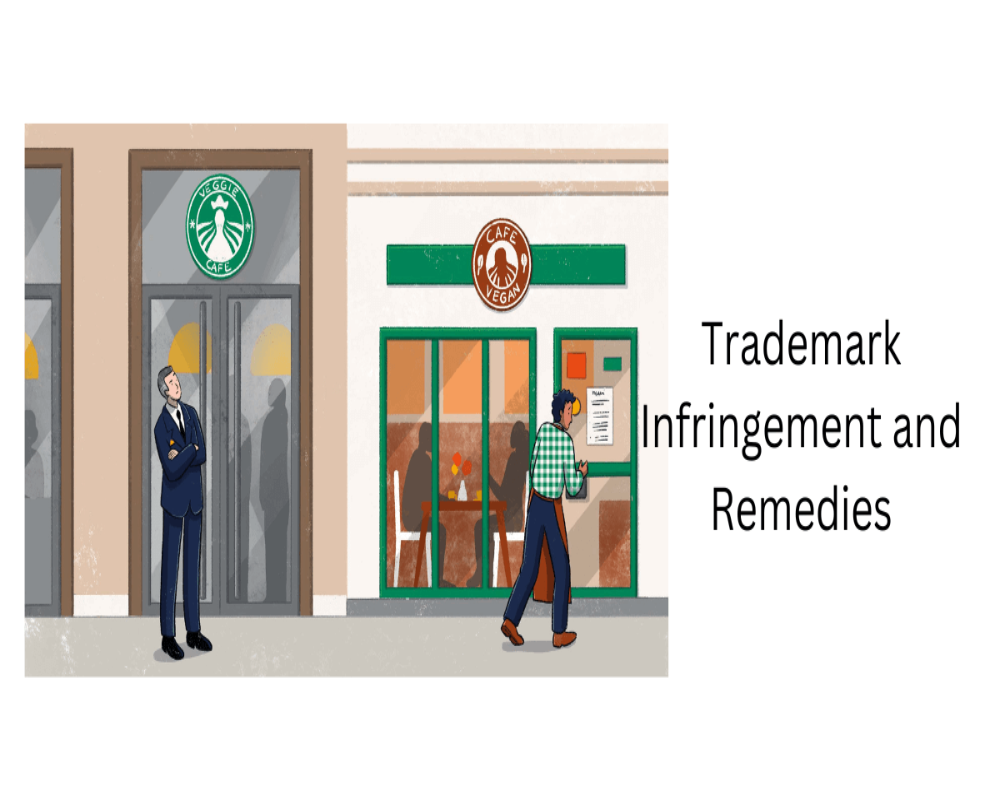
Trademark infringement occurs when a third party uses a trademark that is identical or confusingly similar to a registered trademark, without authorization, in connection with similar goods or services. Trademark infringement undermines the value of a brand and can cause confusion among consumers, leading to financial loss, reputation damage, and loss of market share for the trademark holder. In India, legal remedies for trademark infringement are available under the Trade Marks Act, 1999. These remedies provide trademark owners with various tools to protect their intellectual property and enforce their rights.
Legal Remedies for Infringed Trademarks in India
- Injunctions
An injunction is one of the most effective legal remedies for trademark infringement. It is a court order that prevents the infringing party from continuing to use the trademark. Injunctions can be granted in two forms:
- Temporary Injunction: A temporary injunction can be issued by the court during the pendency of the case to prevent further infringement. The applicant must show that they have a prima facie case and that they would suffer irreparable harm if the infringement continues.
- Permanent Injunction: After a trial and judgment, the court may issue a permanent injunction that permanently restrains the defendant from using the trademark in question.
Injunctions help to prevent further damage to the trademark holder’s business and reputation while the case is being resolved.
- Damages and Account of Profits
If a trademark has been infringed, the trademark owner can claim damages or an account of profits as compensation for the loss caused by the infringement. The court may award the following:
- Actual Damages: This is the monetary compensation for the actual loss suffered by the trademark holder due to the infringement. It is often difficult to quantify and may require evidence of lost sales, reduced market share, or harm to reputation.
- Statutory Damages: In some cases, the court may award statutory damages, which are pre-defined amounts set by law.
- Account of Profits: Instead of damages, the trademark holder may claim the profits made by the infringer as a result of the unauthorized use of the trademark.
The purpose of these remedies is to compensate the trademark holder for the financial losses caused by the infringement and to deter the infringer from continuing to profit from unauthorized use.
- Criminal Remedies
In certain cases, trademark infringement may also result in criminal liability. According to the Trade Marks Act, 1999, anyone who infringes a registered trademark can face criminal charges, which can lead to:
- Imprisonment: The infringer can face imprisonment for up to three years for a first offense and up to six years for a subsequent offense.
- Fines: The court may also impose a fine, which can range from ₹50,000 to ₹2,00,000 for a first offense. For repeat offenses, the fine can be higher.
Criminal prosecution is typically pursued when the infringement is deemed to be willful or done on a commercial scale, such as in cases of counterfeit goods. Criminal remedies serve as a strong deterrent against trademark violations.
- Seizure of Infringing Goods
Under Section 135 of the Trade Marks Act, 1999, a trademark holder has the right to seek the seizure of counterfeit goods from the market. The Customs Authorities are empowered to detain goods that infringe trademarks, and the trademark owner can request their seizure and destruction.
- Seizure Orders: The trademark holder can request a court order to seize counterfeit goods from the marketplace.
- Destruction of Goods: The seized goods may be destroyed under court supervision to prevent their further distribution.
Seizing and destroying counterfeit goods prevents the infringing party from profiting from the use of the trademark and helps preserve the reputation of the trademark holder.
- Customs Enforcement
The Customs Department in India can act to stop the importation of counterfeit goods bearing an infringed trademark. The trademark holder can request customs officials to suspend the clearance of counterfeit goods entering the country. This can be an effective way to combat the sale of counterfeit goods, especially in cases where the goods are imported.
The trademark holder must file a Recordation Request with the Directorate General of Foreign Trade (DGFT) to allow the Customs Department to intercept goods bearing infringing marks. This is a preventive measure to ensure that counterfeit goods do not enter the market in the first place.
- Punitive Action for Willful Infringement
In some cases, the court may award punitive damages if it finds that the infringement was willful or done with the intent to deceive consumers. Willful infringement can be shown when the infringer knowingly uses a similar or identical mark to exploit the trademark holder’s goodwill and reputation.
Punitive damages are awarded in addition to the standard damages and are meant to punish the infringer for their deliberate actions and discourage future violations.
- Rectification of the Trademark Register
In cases of infringement, the trademark holder may also seek to have the infringing trademark removed from the Trademark Register. This can be done through rectification proceedings before the Intellectual Property Appellate Board (IPAB). If the infringement is based on a conflicting trademark that is incorrectly registered, the applicant can request its removal.
Rectification helps to ensure that the Trademark Register remains accurate and that conflicting trademarks are removed, providing clarity to businesses and consumers.
- Alternative Dispute Resolution (ADR)
In some cases, trademark holders may prefer to resolve disputes through Alternative Dispute Resolution (ADR) methods, such as mediation or arbitration, rather than litigation. ADR is a faster and more cost-effective way to resolve trademark disputes. Many trademark licenses and agreements include arbitration clauses to resolve disputes efficiently.
Conclusion
Trademark infringement can cause significant harm to a trademark owner’s business and reputation. Fortunately, Indian trademark law provides a range of legal remedies to address such infringements, including injunctions, damages, criminal action, and seizure of infringing goods. Trademark holders should actively enforce their rights to prevent unauthorized use of their marks and seek appropriate legal recourse when infringement occurs. These remedies not only provide compensation for the harm caused but also serve as a deterrent to infringers, helping to maintain the integrity of the marketplace and protect the value of trademarks.
Hashtags
#trademarkinfringement #trademarkenforcement #trademarkremedies #legalremedies #intellectualproperty #brandprotection #trademarklaws #tradeMarksAct1999 #legalaction #damages #criminalliability #trademarkrights #seizureofgoods #customsenforcement #brandidentity #legalrights #brandreputation #counterfeitgoods #trademarklawyer #trademarkdefense #punitiveaction #trademarkprotection #brandsecurity #marketprotection #trademarkfiling
0 Comments