


Introduction
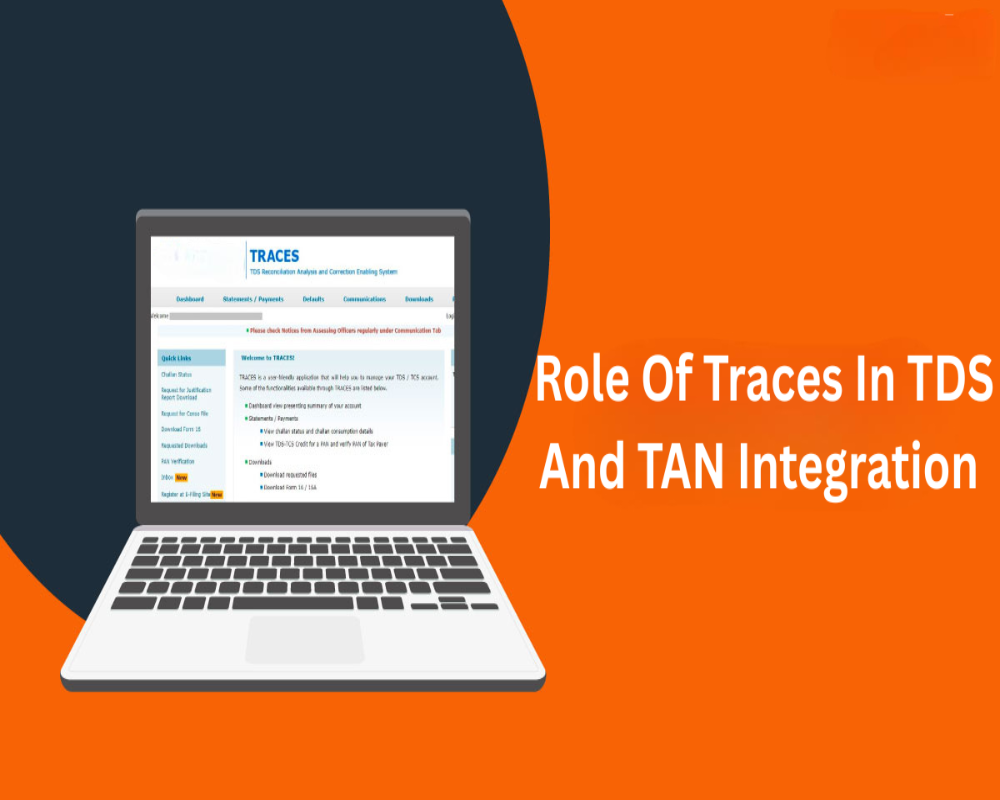
In India’s tax compliance ecosystem, the Tax Deduction and Collection Account Number (TAN) and the Tax Deducted at Source (TDS) framework are intricately connected. The TRACES portal—short for TDS Reconciliation Analysis and Correction Enabling System—acts as the central digital interface that integrates these two elements to streamline, monitor, and enforce tax deduction and reporting processes. Managed by the Income Tax Department, TRACES plays a pivotal role in ensuring that the obligations of TAN holders (deductors) are executed accurately, efficiently, and transparently. It functions as the technological backbone that supports the complete lifecycle of TDS operations—from deduction and deposit to filing, verification, correction, and credit distribution.
TAN as the Anchor for TDS Activities
TAN serves as the unique identifier for all entities—whether individuals, firms, companies, or government departments—that are legally required to deduct or collect tax at source under the Income Tax Act, 1961. This number is used in all documents and communications related to TDS, including returns, payment challans, and certificates. Every TDS transaction is linked to a specific TAN, making it the foundational data point for compliance. Without TAN, no TDS return can be filed, and no tax credit can be tracked or reconciled. Hence, effective integration of TAN with TDS processes is essential, and this integration is operationalized and maintained through TRACES.
Centralized Data Management and Compliance Monitoring
TRACES acts as a centralized platform that maps every TDS return and payment to a specific TAN. When a deductor uploads a TDS return, the system verifies that the TAN is valid and active. The data submitted under this TAN is then used to update the records of deductees (recipients of income), calculate defaults, and populate tax credit statements such as Form 26AS. This centralized repository ensures consistency, avoids duplication, and enables real-time validation of information. Through TAN-TDS integration on TRACES, the Income Tax Department maintains a live and accurate database of tax deductions, collections, and credit assignments.
Automation of TDS Certificate and Return Management
Through the TRACES portal, TAN holders can generate essential documents such as Form 16 and Form 16A, which are TDS certificates issued to employees and vendors respectively. These forms are automatically linked to the TAN used during deduction and filing. The deductor’s TAN is printed on each certificate, serving as an official marker of compliance. The same TAN is also used to track quarterly returns (Form 24Q, 26Q, 27Q), which are filed through the portal and validated against the details stored in TRACES. This automation not only ensures uniformity and legality but also strengthens the reliability of the data submitted by the deductor.
Error Detection and Correction Framework
One of the most powerful roles of TRACES is in identifying mismatches, defaults, and anomalies in TDS data and enabling TAN holders to correct them efficiently. When incorrect data is filed under a TAN—such as errors in PAN, deduction amount, or payment dates—the system flags these issues and generates justification reports. TAN holders can log into the TRACES portal to view these reports and use the correction modules to amend the errors. Because these corrections are linked to the deductor’s TAN, the portal maintains a clear trail of updates and ensures that all revisions are consistent with the original filings.
Reconciliation of Tax Credit and Deductee Verification
The integration of TAN and TDS through TRACES also facilitates seamless credit reconciliation for deductees. When TDS is deposited under a TAN and reported correctly, it reflects in the deductee’s Form 26AS. This is only possible because the TRACES system links the deductee’s PAN to the deductor’s TAN and verifies that the tax has been both deducted and deposited. In this way, the portal acts as a bridge between the deductor’s compliance and the deductee’s entitlement to credit. Any discrepancy due to errors in quoting TAN, incorrect amounts, or mismatched challans can be immediately flagged and corrected within the TRACES ecosystem.
Digital Governance and Enhanced Transparency
TRACES has transformed the traditional, paper-based TDS compliance into a fully digital and transparent system. All operations—from TAN registration to return filing, certificate generation, and correction—are executed online, creating a time-stamped, auditable trail for every action. For the Income Tax Department, this means greater oversight and control. For TAN holders, it means reduced complexity, minimized human error, and increased confidence in their tax records. By tightly integrating TAN into every TDS-related transaction, TRACES eliminates ambiguity and ensures that each deductor is accountable for their statutory responsibilities.
Conclusion
The role of TRACES in integrating TAN with TDS compliance is fundamental to the functioning of India’s tax deduction system. By serving as a centralized, intelligent platform, TRACES ensures that every TDS action—whether it involves deduction, deposit, reporting, correction, or certificate issuance—is traceable and verifiable against a valid TAN. This integration enables the Income Tax Department to monitor compliance effectively while empowering deductors to fulfill their obligations with clarity and efficiency. For TAN holders, TRACES is not just a compliance tool—it is the digital infrastructure that upholds the legality, accuracy, and transparency of their tax deduction operations.
Hashtags
#TRACES #TDS #TAN #TaxCompliance #TaxDeduction #FinancialManagement #Taxation #IncomeTax #TaxFiling #DigitalTaxation #TaxRecords #TaxSystem #GovernmentCompliance #Finance #Accounting #TaxRegulations #TaxReporting #Efiling #TaxUpdates #BusinessFinance
0 Comments