


How Special Resolutions Are Passed in Public Limited Companies
Introduction
In a Public Limited Company, decisions of significant importance—such as altering the company’s capital structure, changing its name, or approving mergers—require the approval of shareholders through a special resolution. This type of resolution demonstrates a higher level of consensus than ordinary resolutions and is governed by the Companies Act, 2013. Passing a special resolution ensures that the decision has the strong backing of the majority of shareholders and is in line with the company’s long-term interests. This article explains the process, legal requirements, and execution of special resolutions in Public Limited Companies.
Definition of a Special Resolution
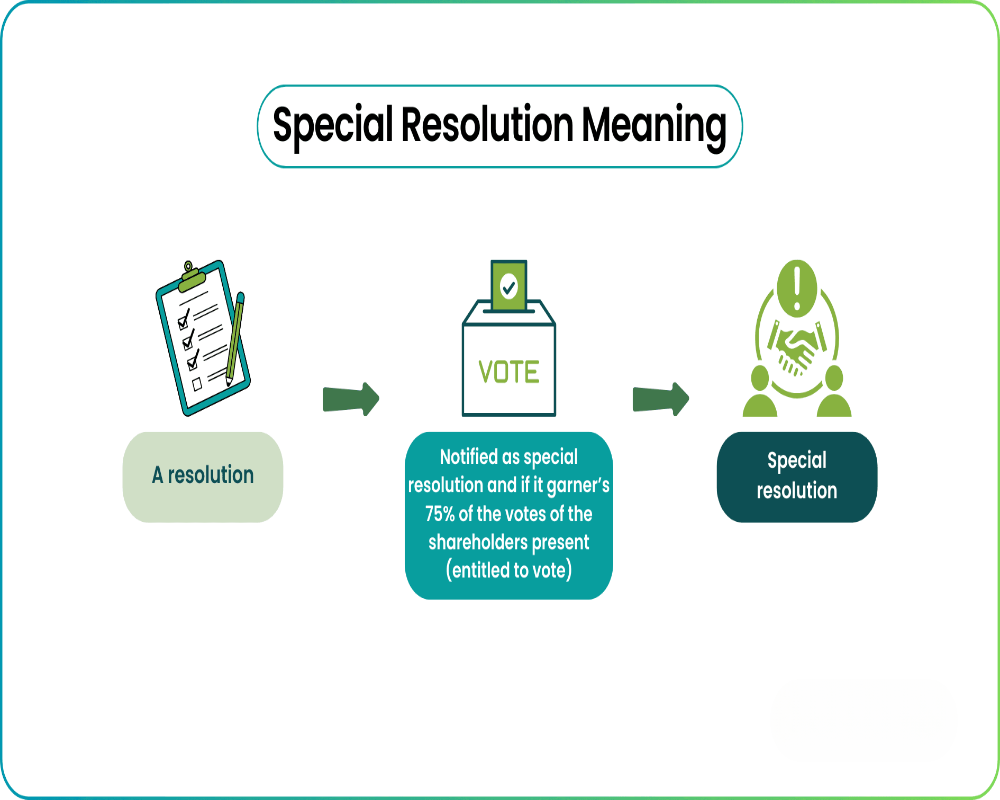
According to Section 114(2) of the Companies Act, 2013, a special resolution is one where:
- The intention to propose the resolution as a special resolution is specified in the notice calling the meeting.
- The votes cast in favour of the resolution are at least three times the number of votes cast against the resolution.
This means at least 75% of the voting shareholders must approve the resolution, making it more stringent than an ordinary resolution.
Matters Requiring Special Resolution
Special resolutions are required for key corporate decisions such as:
- Altering the Articles of Association or Memorandum of Association
- Change in the company name
- Reduction of share capital
- Issue of shares with differential rights
- Buyback of shares beyond 10%
- Conversion of a public company into a private company
- Voluntary winding-up
These actions impact the company’s structure and operations and thus need enhanced shareholder approval.
Issuing Notice to Members
To pass a special resolution, the company must issue a notice of general meeting to all shareholders at least 21 clear days before the meeting. The notice must specify:
- The date, time, and venue of the meeting
- The exact wording of the proposed special resolution
- An explanatory statement under Section 102 of the Companies Act, providing reasons for the resolution and any material facts
Conducting the General Meeting
The special resolution must be passed in a general meeting of shareholders, which can be:
- An Annual General Meeting (AGM)
- An Extraordinary General Meeting (EGM)
During the meeting, the resolution is put to vote after discussing its purpose and implications. A quorum (minimum number of members required) must be present as per the Companies Act.
Voting Mechanism
Shareholders can vote on the special resolution by:
- Show of hands (for small meetings)
- Poll (if demanded by shareholders)
- Postal ballot (for certain items like altering AOA/MOA or approving related party transactions)
- E-voting, which is mandatory for listed companies and companies with more than 1,000 shareholders
The result is determined based on the voting pattern—at least 75% of the total votes cast must be in favour of the resolution.
Filing with the Registrar of Companies (RoC)
Once a special resolution is passed, the company must file the outcome with the Registrar of Companies using Form MGT-7 (for annual return) and Form MGT-14 (for resolutions) within 30 days. The filed forms must be signed digitally and accompanied by certified copies of the resolution and explanatory statement.
Maintaining Corporate Records
The company must update its minutes book, register of resolutions, and relevant statutory registers to reflect the passing of the special resolution. This ensures transparency and future compliance during inspections or audits.
Legal Consequences of Non-Compliance
Failure to pass a special resolution where required, or failure to file it with the RoC, can lead to:
- Invalidation of the corporate action
- Fines and penalties under the Companies Act
- Disqualification of directors in serious cases of negligence
Hence, proper procedural compliance is critical.
Conclusion
Special resolutions in Public Limited Companies are essential tools for approving major corporate decisions that require a strong mandate from shareholders. With clearly defined procedures involving notice, voting thresholds, and statutory filings, special resolutions uphold the principles of transparency, accountability, and shareholder democracy. Following the proper process ensures legal validity and strengthens corporate governance in line with the Companies Act, 2013.
Hashtags
#PublicLimitedCompanies #SpecialResolutions #CorporateGovernance #CompanyLaw #BusinessRegulations #ShareholderRights #BoardMeetings #VotingProcess #CorporateDecisions #LegalFramework #CompanyMeetings #BusinessManagement #ShareholderEngagement #CorporateTransparency #CompanyResolutions #BusinessStrategy #FinancialRegulations #CorporateStructure #LegalCompliance #BusinessEducation
0 Comments