

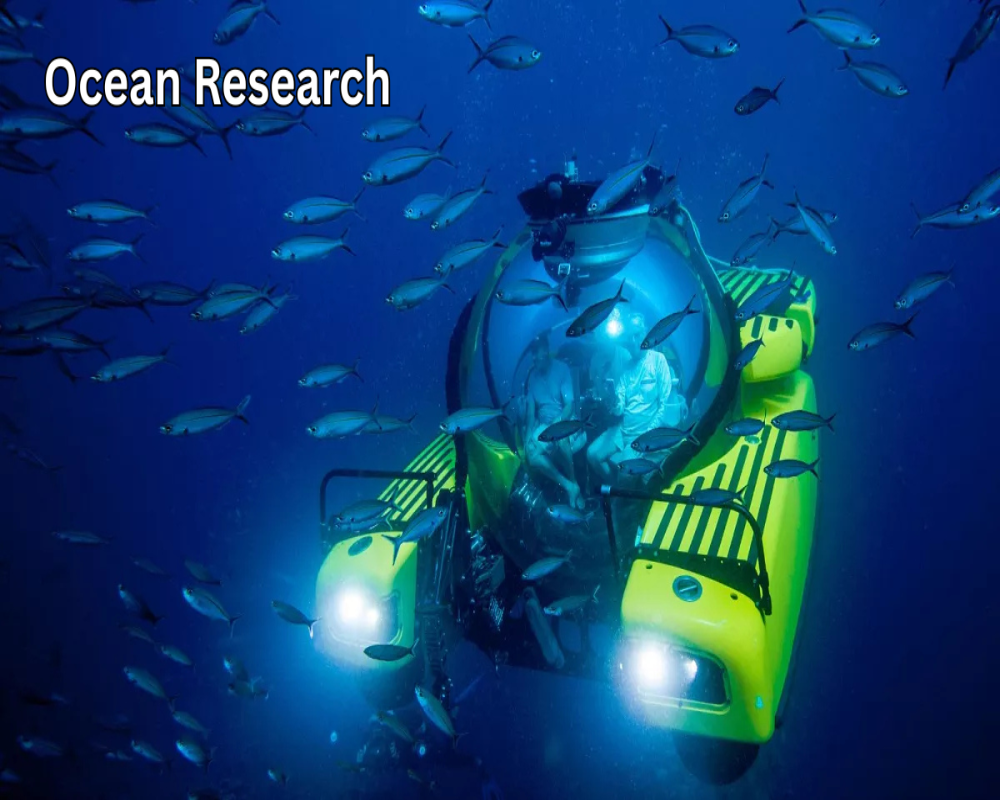

The Indian government has introduced a new framework to support joint ventures (JVs) in ocean research, aimed at enhancing India’s capabilities in marine science, climate monitoring, biodiversity conservation, and blue economy development. Spearheaded by the Ministry of Earth Sciences (MoES) and supported by the National Institute of Ocean Technology (NIOT) and the Indian National Centre for Ocean Information Services (INCOIS), the framework facilitates collaboration between Indian research institutions, private companies, international oceanographic agencies, and technology innovators.
Under this framework, joint ventures are encouraged to undertake projects related to deep-sea exploration, ocean energy, seabed mapping, marine biotechnology, and coastal ecosystem monitoring. The government allows 100% foreign direct investment (FDI) under the automatic route in scientific research and marine technology sectors, making it easier for global entities to collaborate with Indian partners. JVs can access funding support, priority research clearances, and infrastructure such as research vessels, data platforms, and ocean observatories, especially under national initiatives like the Deep Ocean Mission.
Special incentives are provided to ventures that contribute to sustainable ocean resource utilization, climate resilience, marine pollution mitigation, and marine data sharing platforms. JVs that also promote technology transfer, capacity building, and international scientific exchange are prioritized for grants, pilot programs, and public-private innovation schemes. Through this structured framework, the government seeks to strengthen India’s role in global ocean science, protect marine ecosystems, and unlock the potential of its vast exclusive economic zone through collaborative and forward-looking ocean research.
0 Comments