

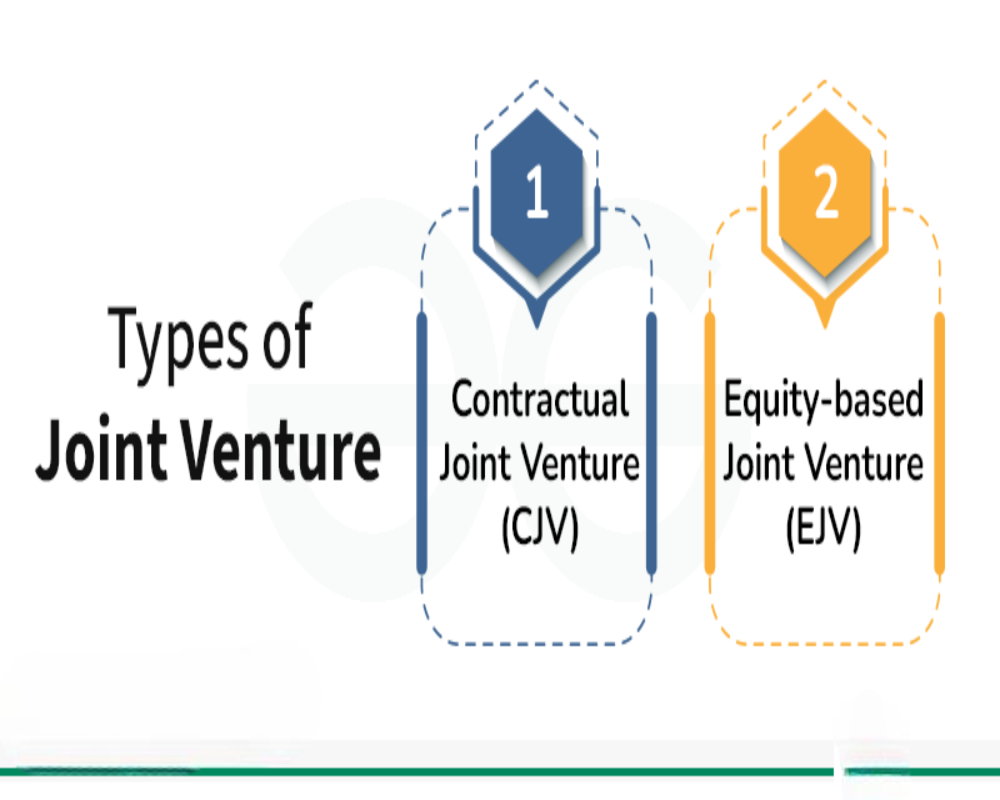

Equity-Based Joint Ventures
- Involves the creation of a separate legal entity.
- Partners invest capital and receive ownership shares.
- Profits and losses are shared based on shareholding.
- Common in both domestic and international collaborations.
- Operates under company law and regulatory guidelines.
Contractual Joint Ventures
- Formed through a contract without creating a new entity.
- Focuses on specific projects or business goals.
- Partners agree on roles, contributions, and profit-sharing.
- Suitable for short-term collaborations or single transactions.
- Legally binding under contract law in India.
Domestic Joint Ventures
- Involves only Indian companies or individuals.
- Regulated under Indian laws and industry norms.
- Often used to combine local expertise and resources.
- No foreign investment or international compliance involved.
- Simpler regulatory procedures compared to international JVs.
International Joint Ventures
- Includes one or more foreign companies partnering with Indian firms.
- Requires adherence to Foreign Direct Investment (FDI) policies.
- Useful for market entry, technology transfer, and expansion.
- Subject to approval from regulatory bodies like the RBI or DPIIT.
- Involves cross-border legal, tax, and compliance issues.
Project-Based Joint Ventures
- Formed specifically for completing a defined project.
- Dissolves automatically after the project completion.
- Common in infrastructure, construction, and large contracts.
- Clear scope, timelines, and deliverables are agreed upon.
Allows risk-sharing and resource pooling for large tasks.
0 Comments