

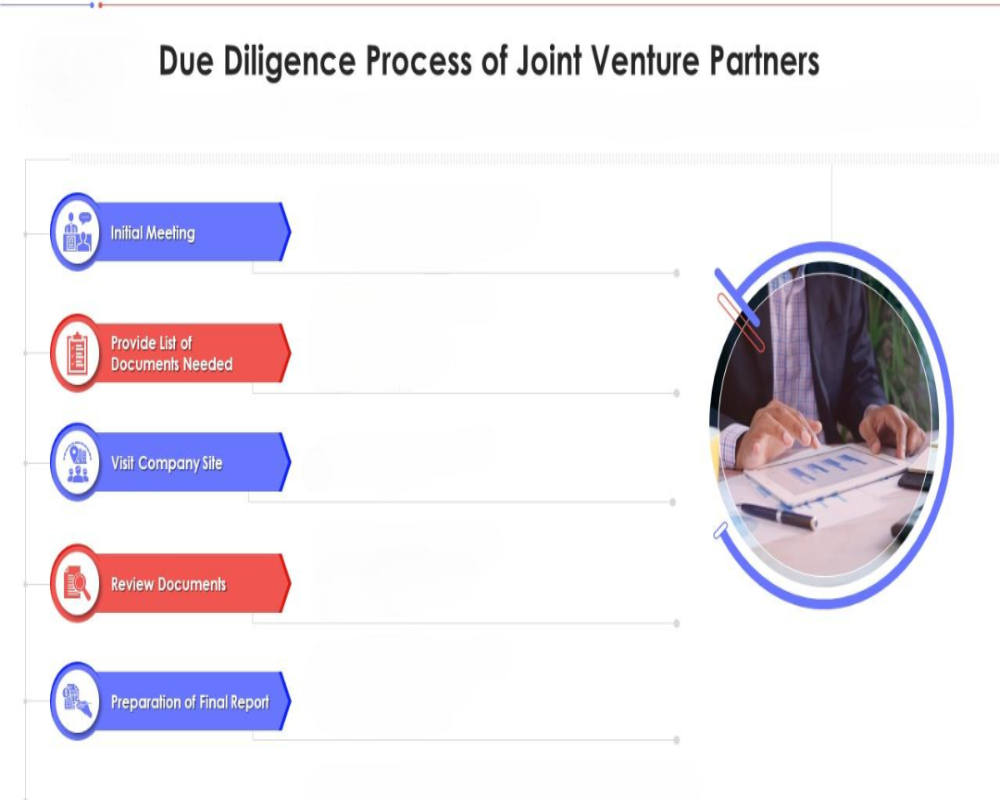

Preliminary Assessment
- Begin by identifying and shortlisting potential JV partners based on business needs.
- Assess strategic fit, market presence, technological capabilities, and reputation.
- Conduct background research through public records, websites, and third-party sources.
- Review the partner’s corporate structure, key management, and existing collaborations.
- Determine the partner’s intent and objectives for entering the joint venture.
Legal Due Diligence
- Examine the legal status of the partner’s entity, including incorporation documents and compliance history.
- Review ongoing or past litigation, disputes, and regulatory violations.
- Verify ownership of assets, licenses, intellectual property, and key contracts.
- Ensure compliance with applicable laws such as corporate, tax, labor, and environmental regulations.
- Review the terms of current JV agreements or shareholder arrangements, if any.
Financial Due Diligence
- Analyze the partner’s audited financial statements, cash flow, and balance sheet for the past 3–5 years.
- Assess liabilities, debt levels, tax obligations, and contingent exposures.
- Review profitability, revenue trends, and financial ratios.
- Evaluate the partner’s creditworthiness and funding capacity for the JV.
- Identify any financial risks that may affect joint venture operations.
Operational and Commercial Due Diligence
- Evaluate the partner’s business model, client base, supply chain, and operations.
- Assess production capabilities, technology platforms, and quality controls.
- Review sales performance, market share, pricing strategies, and distribution networks.
- Examine existing vendor, customer, and employment agreements.
- Understand operational synergies and integration challenges with the JV’s scope.
Strategic and Cultural Alignment
- Assess alignment of vision, mission, and long-term goals between both parties.
- Evaluate the compatibility of management styles, decision-making practices, and corporate culture.
- Conduct joint meetings or workshops to test working relationships.
- Identify potential conflicts in governance, control, or risk appetite.
- Ensure shared understanding of growth plans, capital commitment, and exit strategies.
0 Comments