Publish: September 5, 2025
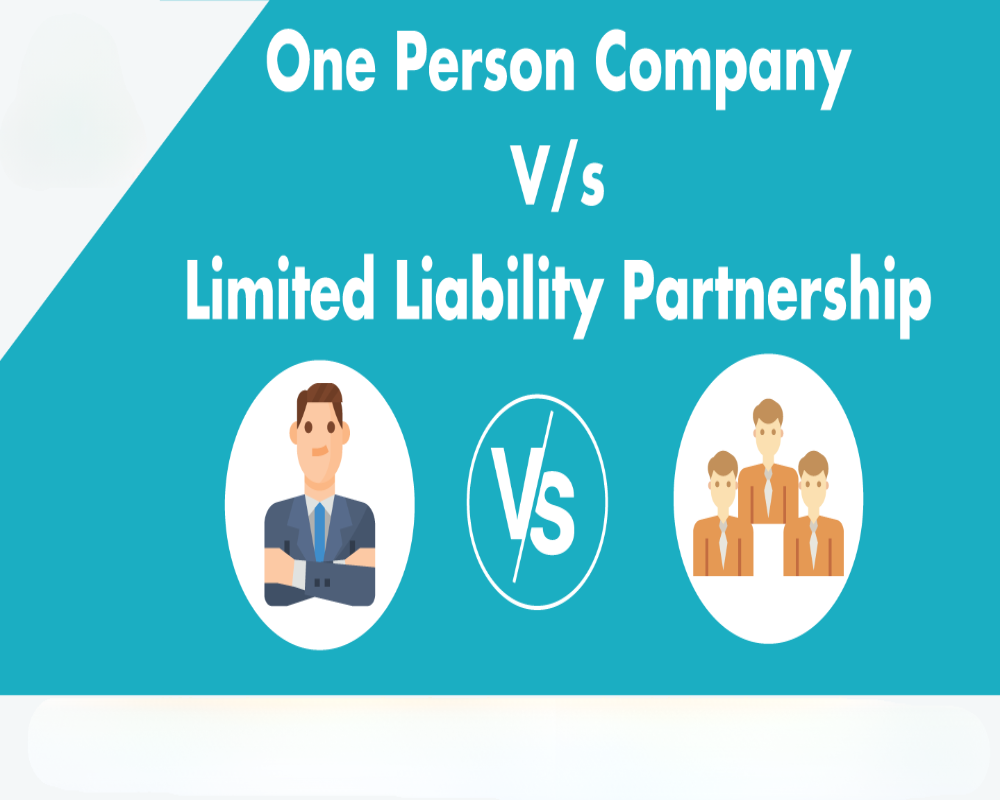
How is LLP different from One Person Company?
Ownership and Structure
- An LLP (Limited Liability Partnership) requires a minimum of two partners, with no maximum limit
- A One Person Company (OPC) can be formed by a single individual only
- LLP is a partnership-based structure, while OPC is a corporate entity
- In LLP, ownership and management can be shared among partners
- In OPC, the sole owner controls the business, though a nominee is mandatory
Governing Law
- LLPs are governed by the Limited Liability Partnership Act, 2008
- OPCs are governed by the Companies Act, 2013
- LLPs follow a more flexible, contract-based model
- OPCs are subject to stricter corporate regulations similar to private limited companies
- Different rules apply for compliance, meetings, and reporting
Liability and Legal Status
- Both LLP and OPC offer limited liability protection to their owners
- LLP is a separate legal entity from its partners
- OPC is also a separate legal entity, distinct from its sole shareholder
- In both cases, personal assets are protected from business liabilities
- Liability arises only in cases of fraud or wrongful acts
Compliance and Filing
- LLPs have lower compliance requirements, such as filing Form 8 and Form 11 annually
- OPCs must comply with annual returns, board meetings, financial statements, and ROC filings
- LLPs do not need to hold board or general meetings
- OPCs must follow company law procedures, even with only one person involved
- LLPs are more cost-effective in terms of compliance
Suitability and Purpose
- LLPs are suitable for professional firms, service providers, and joint ventures
- OPCs are ideal for solo entrepreneurs who want to operate with limited liability
- LLPs allow capital and responsibility sharing among multiple partners
- OPCs are restricted to a single promoter with no partnership provision
- LLPs are more suitable for long-term scaling or partnership-based businesses



0 Comments